Cards, Universe & Everything
- 4.4
- Rating
- 1.00M
- Installs
- Free
- Price

 Analysis by App-foxy
I went into Cards, Universe & Everything expecting a light trivia game, but its real appeal is more competitive than that. It turns general knowledge into a strategy-card experience, so knowing an answer is only part of the job. I also have to think about timing, card choices, and how much confidence I should place in what I know. That combination gives it more staying power than a standard quiz app, while still keeping each session approachable.
Developed by Avid Games, this free strategy game is aimed at players who enjoy learning, collecting, and testing themselves without committing to a long traditional strategy match. Its store summary, “Trivia Geeks Become Battle Legends,” captures the broad idea, although I think the more useful description is this: it is a knowledge game with a tactical layer wrapped around it. The distinction matters, because players looking only for rapid-fire questions may find its card-based structure slower, while people who like making decisions around trivia will find more to explore.
How the trivia and card strategy work together
The strongest part of the experience is the way questions stop being isolated facts. In an ordinary quiz, I answer correctly or incorrectly and immediately move on. Here, the surrounding card-battle format makes each decision feel connected to a wider plan. A good answer can help, but choosing when to rely on a particular card or approach can matter just as much. That gives familiar trivia a sense of consequence.
You May Also Like

 Blood Strike: 2.5 Anniversary
Blood Strike’s Loadouts Turn Every Drop Into a Tactical Gamble
A close look at Blood Strike’s custom loadouts: how fast access to signature weapons reshapes its battle royale rhythm, rewards preparation, and narrows the gap between fights.

 Pandora - Music & Podcasts
Pandora’s Music Is Easy to Start, but Harder to Recover
Pandora’s strength is its low-effort path from a seed to a station. Its weak spot is how much confidence it asks you to place in connection, setup, and quiet recovery.

 8 Ball Pool
 Is Built on Rivalries, Rematches, and Routine
A close look at the rivalries, rematches, shared routines, and unanswered safety questions that turn a quick pool match into a persistent mobile community.

 Samsung Music
’s Quiet Strength Is Playing What You Already Own
Its reach comes less from spectacle than from dependable access to a personal library. That simplicity is both the app’s strongest retention engine and its ceiling.

 AccuWeather: Weather Radar
AccuWeather Review: A Quick, Clear Forecast for Everyday Decisions
For everyday plans, the best forecast is the one you can understand quickly. AccuWeather makes rain timing, radar, and local conditions easy to act on, with a few trade-offs.

 Hill Climb Racing
Why Hill Climb Racing Still Turns Crashes Into One More Run
A tiny car, a bumpy hill and one more upgrade: Hill Climb Racing keeps resurfacing because its simple chaos makes every near-miss feel personal.
More From Our News Desk



I also like that the game can appeal to two different moods. When I have only a short break, I can treat it as a quick knowledge challenge. When I am more invested, I can pay closer attention to the strategic side and think about how my collection and choices fit together. That flexibility is one reason the game feels more substantial than a simple question-and-answer app.
The “Cards, Universe” short description is deliberately brief, but the actual identity of the game comes from the meeting point between cards and broad subject knowledge. It is not presented as a serious educational tool, and I would not use it as a replacement for structured study. Still, it rewards curiosity. Players who enjoy remembering unusual facts, spotting patterns, or learning through repeated play have a reason to return even after the novelty of the first sessions fades.
In practice, I found the best way to approach a match was to avoid treating every question as a desperate gamble. The strategic layer encourages patience. If I rushed every decision simply because I recognized a topic, I was more likely to overlook the larger situation. A less obvious answer can sometimes be more useful than an exciting one if it supports the direction I am trying to take. That is a small but important difference from quiz games where speed is almost everything.
Why the format is more engaging than a normal quiz
A conventional trivia app usually measures how quickly and accurately I can respond. That can be satisfying, but it also becomes repetitive when the only meaningful improvement is memorizing more information. Cards, Universe & Everything gives me another route to improve: I can become more disciplined about decisions. Even when I do not know every answer, I can play more thoughtfully.
That creates a useful trade-off. A knowledgeable player has an obvious advantage, but knowledge alone does not remove the need for judgment. Conversely, someone who is not a walking encyclopedia can still enjoy the game if they like planning around imperfect information. I found that balance more welcoming than formats that make a single obscure question feel like an automatic defeat.
There is also a social quality to the design, even when I am playing privately. Trivia naturally invites conversation. I often found myself stopping to explain an answer, compare guesses, or challenge my own assumptions. That makes it a reasonable choice for a casual group session, especially among friends who enjoy different subjects. The game does not require everyone to have the same knowledge profile, because the card element gives the discussion another dimension.
One practical tip is to pay attention to the kinds of questions that repeatedly catch you out rather than focusing only on your wins. A missed answer is more useful when it reveals a weak area or a tendency to guess too quickly. I would treat those moments as feedback about play style, not merely as lost progress. That mindset makes the game less frustrating and helps the strategic side become more deliberate over time.
The collection side rewards patience, but it can change the feel of play
The card-collection structure gives the game a longer arc than a standalone quiz. I enjoy having a reason to think beyond the current round, but collection systems can also affect how fair or relaxed a game feels. Players who like building toward a stronger setup may find that motivating. Players who want every match to depend almost entirely on immediate knowledge may see the collection element as an unnecessary layer.
That difference is important when deciding whether to install it. The game is free, which makes trying it straightforward, but it includes optional purchases ranging from $0.49 to $199.99 for an item. I would approach that store carefully. The presence of a broad purchase range does not automatically make the game unsuitable, yet it does mean I would set a personal spending limit before getting deeply involved with collecting. The safest way to enjoy it is to decide whether I am playing for the questions and decisions first, rather than allowing the collection chase to dictate my habits.
My advice is to give the core experience enough time before considering any purchase. First learn whether the question style, pacing, and strategic decisions actually suit you. If the game is not enjoyable without extra investment, buying more items is unlikely to fix the underlying mismatch. On the other hand, players who already like the format may see optional spending as a way to support a hobby, provided they keep it controlled and intentional.
This is one of the less obvious trade-offs in the design: the same collection structure that creates long-term motivation can also make the game feel less like a pure test of knowledge. I personally prefer it when I treat the cards as part of the game’s identity instead of judging them against a traditional quiz. That framing keeps the experience coherent.
Where the game can lose momentum
The main weakness is that the hybrid format will not satisfy everyone. If I want a clean quiz with immediate questions and almost no surrounding management, this can feel more involved than necessary. The strategic decisions are the reason to play, but they are also the source of friction for anyone who only wants a quick knowledge test.
There is a second issue with replay value. Trivia games depend heavily on how fresh the questions feel to an individual player. Once I become familiar with recurring subjects or patterns, the challenge can shift from knowing the answer to remembering that I have seen something similar before. The card system helps soften that problem, but it cannot remove the basic limitation of repeated-question games.
The game also asks players to tolerate uneven confidence. Some rounds may feel comfortable because the topics match personal interests; others may expose gaps that have little to do with strategic skill. I enjoy that unpredictability, but I understand why it could frustrate someone who prefers tightly controlled competitive games. A player seeking a perfectly even contest may prefer a strategy title with fixed units and transparent abilities rather than one built around broad general knowledge.
Another limitation is audience fit. The content rating is Everyone, so the game is positioned as accessible to a broad age range. That makes it easy to recommend for family-friendly casual play, but it also means experienced strategy players should not expect the depth or complexity of a large-scale tactics game. The decisions are meaningful within the format, yet this remains a compact trivia-centered experience rather than a replacement for a full strategy campaign.
I would also avoid installing it solely because it has a high player count. It has passed one million installs and holds a 4.4 average from around fifty-three thousand ratings, which suggests a substantial audience and generally positive reception. Those figures are encouraging, but they cannot tell me whether I personally enjoy the combination of trivia and cards. The decisive test is whether I like making strategic choices when my knowledge is incomplete.
A realistic way to fit it into daily play
Imagine having ten minutes before a train arrives or while waiting for a friend. A normal strategy game may be too demanding to start, while a basic quiz may feel disposable. This is where I think the game works best. I can play a short session, enjoy a few questions, and still feel that my decisions mattered. I do not need to prepare a long-term plan before opening it, but I can develop better habits if I keep returning.
For that kind of routine, I would recommend playing with a simple goal rather than chasing every possible reward. For example, I might focus on making careful choices when I am uncertain, or on learning which subjects consistently affect my performance. That turns a spare-minute session into something more satisfying than mindless tapping. It also reduces the temptation to measure every play session only by whether I won.
For families or friends, I would use it as a conversation starter rather than a formal competition. Let people explain why they chose an answer, and the game becomes more entertaining for players with different strengths. Someone strong in history may struggle with science, while another player may know entertainment topics but make better tactical decisions. That variety is more interesting than a format where one person dominates every round through speed alone.
For solo players, the most useful workflow is to notice the relationship between knowledge and decisions. After a difficult match, I would ask myself two questions: did I lose because I lacked the information, or because I committed too early? The answer points to a different improvement. More reading may help with the first problem; patience and better planning may help with the second. Few casual trivia games make that distinction feel so clear.
Who should try it, and who should choose something else
I think it is a strong fit for people who enjoy trivia but want more agency than selecting an answer. It is also well suited to casual strategy fans who like collection and progression without needing a large, complicated interface. The Everyone rating makes it a comfortable option for mixed-age play, and the free entry point means I can test the concept without making a commitment.
It is especially appealing if you enjoy being surprised by what you do not know. The game is at its best when a question challenges your assumptions and forces you to make a sensible decision anyway. Players who treat every mistake as part of the learning process will probably get more from it than players who need a flawless run to stay interested.
I would skip it if my priority is a pure competitive strategy game with no trivia component. In that case, a traditional tactics or deck-building title with clearly defined units may offer more control and deeper planning. I would also look elsewhere if I want a study app that follows a curriculum, tracks academic progress, or explains every answer in detail. This game can encourage curiosity, but its purpose is entertainment first.
Likewise, players who dislike optional purchase systems should think carefully before settling in. The game can be approached as a free experience, but the item prices extend up to $199.99, and that is a meaningful consideration for anyone sensitive to collection-driven spending. I would recommend installing it only if you are comfortable enjoying the available play without feeling pressured to buy your way toward a preferred setup.
My verdict after spending time with it
Cards, Universe & Everything succeeds because it gives trivia a second layer without losing the quick satisfaction of answering questions. I like that it asks me to use what I know while also accepting that I will sometimes be uncertain. The card format makes victories feel earned through judgment, not just memory, and it gives short sessions more purpose than a conventional quiz round.
Its limitations are real. The hybrid structure may feel unnecessarily busy to players who want instant questions, repeated topics can reduce the surprise over time, and the optional item pricing calls for sensible boundaries. It is also not deep enough to replace a dedicated strategy game or focused learning tool. Those are not small details, but they help define the right expectations.
For me, the recommendation is clear: try it if you want a free, accessible strategy game built around general knowledge and you enjoy improving through both answers and decisions. The current version is 2.11.49 and supports Android 7.0 or later, so compatibility is worth checking before installing. With an average of 4.4 from roughly fifty-three thousand ratings and a broad player base, it has clearly found an audience, but its real strength is more personal than numerical.
I would keep it installed as a compact game for waiting rooms, relaxed evenings, and friendly debates over surprising answers. The best way to enjoy it is to treat the cards as a tactical tool, not as a shortcut around knowledge. If that balance sounds appealing, Avid Games has made a genuinely distinctive trivia experience. If you want either serious study or a fully traditional strategy battle, another category of app will serve you better.
FAQs for Cards, Universe & Everything
01What is Cards, Universe & Everything?
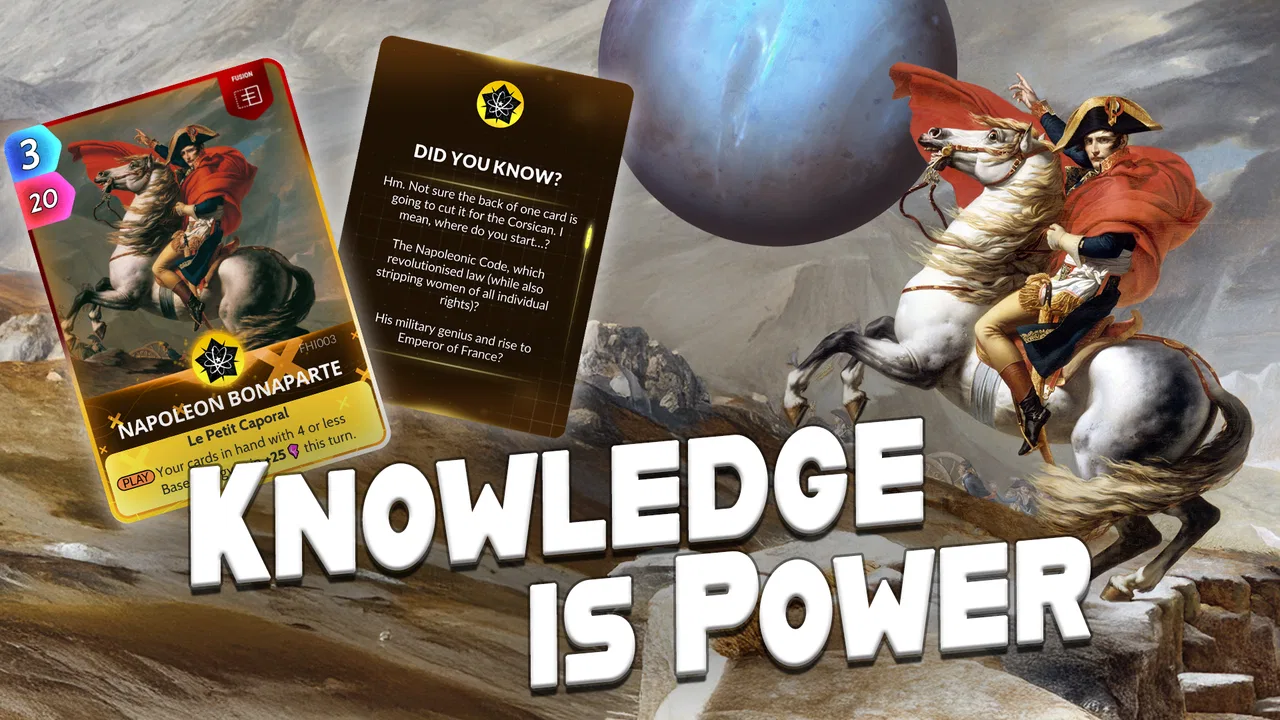
Cards, Universe & Everything is a collectible card game that combines card battles with a wide range of subjects, including history, science, mythology, animals, technology, and popular culture. Each card has its own statistics, abilities, and background information. The game is designed for players who enjoy strategic matches as well as discovering interesting facts while building and improving a personal collection.
02How does the gameplay work in Cards, Universe & Everything?
Matches are based on choosing cards from your deck and using their strengths, special abilities, and categories to defeat your opponent. Success depends on more than simply owning powerful cards, because deck composition, timing, and understanding different themes can make a major difference. As you play, you can experiment with combinations, learn card interactions, and adjust your strategy for different opponents.
03Can I play Cards, Universe & Everything without spending money?
Yes, the game can generally be downloaded and played for free, allowing players to collect cards, complete matches, and progress without an initial purchase. However, it may include optional in-app purchases that provide additional resources, card packs, or other conveniences. Free players may need more patience to unlock certain content, so it is worth checking the store settings and purchase options before handing the game to children.
04Does Cards, Universe & Everything require an internet connection?
An internet connection is normally important for the main experience because the game includes online matches, account progression, events, updates, and collection synchronization. Some screens or previously viewed information may remain accessible temporarily, but you should not expect the full game to work reliably offline. A stable connection is especially recommended during competitive matches to reduce delays, disconnections, or lost progress.
05Is Cards, Universe & Everything suitable for children and new card-game players?
The game is approachable for beginners because it introduces its card systems gradually and presents information in a visually engaging format. Its educational facts can also make it appealing to younger players, although the strategic depth increases as collections and competition develop. Parents should review the age rating, online interaction features, advertisements, and in-app purchases, since availability and safety options may vary by platform and region.
Pros
- Creative card-based gameplay with plenty of room for experimentation.
- Simple rules make it approachable for new players.
- Strategic choices keep matches engaging beyond the first few rounds.
- Distinct card combinations encourage different play styles.
- Compact matches suit quick gaming sessions.
Cons
- The card pool may feel limited for players seeking long-term variety.
- Some combinations can be difficult to understand without guidance.
- Progress may feel slow when unlocking new content.
- The interface can become busy during complex turns.
- Players may need several matches to fully learn the strategy.

Cards, Universe & Everything
Gallery